

Income in the month it lands, a resource after that
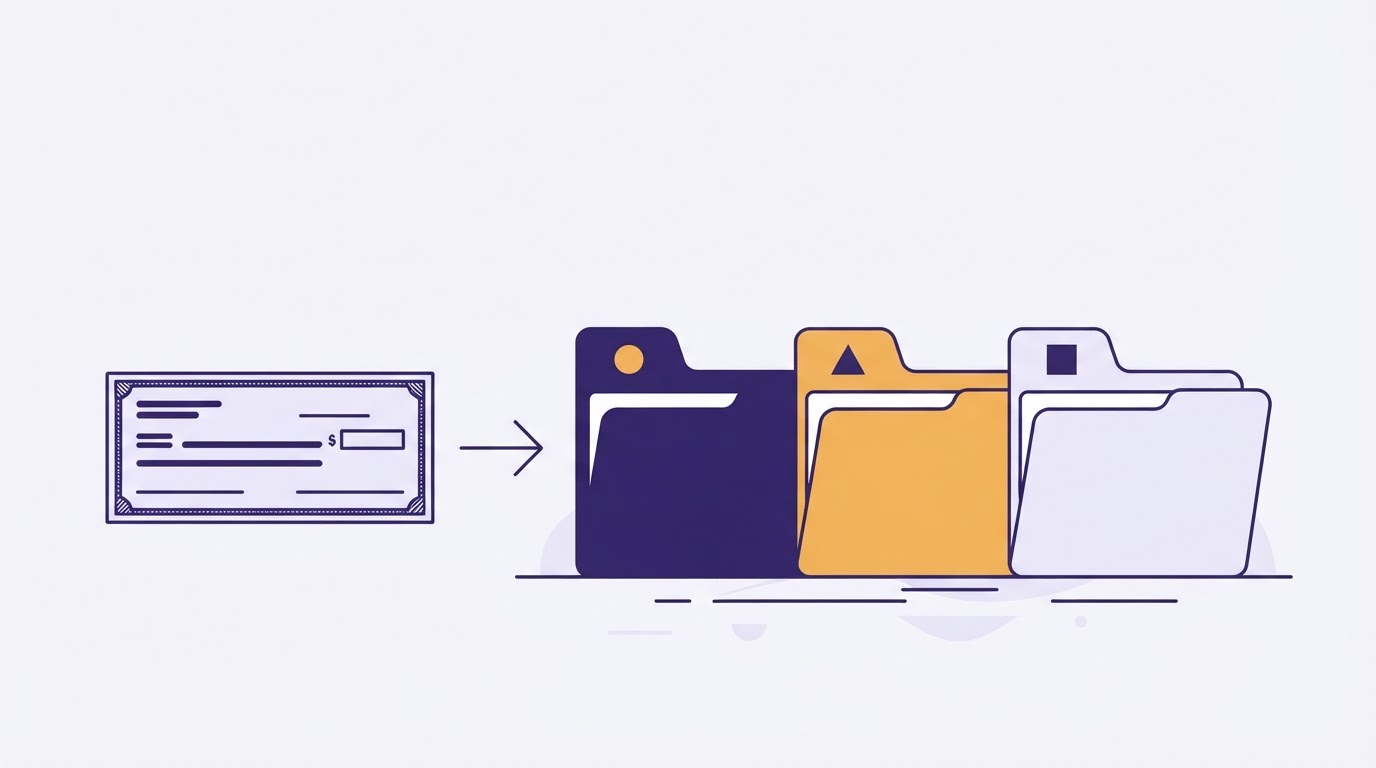
A Social Security Disability Insurance back payment is money owed for past months of disability, released in one lump sum once a claim is approved. Every major benefit program treats that lump sum as income in the month it is received. The disagreement between programs starts immediately after that: once the money has been sitting in an account for a full calendar month, some programs stop calling it income and start calling it a resource (an asset that counts toward a savings or resource limit), while others keep tracking it as income spread across time, and still others exclude it from resource counting altogether for a defined window. Because SNAP, housing assistance, and Medicaid each answer “is this income or is this a resource, and for how long?” differently, the same deposit can trigger three different reactions depending on which program is doing the counting.
This is the single most useful thing to understand before a back payment arrives: the check itself doesn’t change, but its legal identity shifts depending on which agency is looking at it and when. Households juggling more than one program often get accurate information from each caseworker individually and still end up confused, because no one is translating between the three frameworks. That’s the gap this article is trying to close.
SNAP’s treatment of lump sums in the month received
SNAP (food assistance) generally excludes lump-sum payments, including retroactive disability back pay, from countable income in the months after the money arrives. Instead, SNAP rules typically treat a one-time lump sum as a resource beginning in the month it’s received, not as ongoing income that reduces monthly benefits going forward. That distinction matters because SNAP has traditionally been more forgiving of one-time windfalls than programs that recalculate income month to month.
Where this gets complicated is the resource limit itself. Many SNAP households, particularly those with elderly or disabled members, are subject to a countable resource limit, and even households that are otherwise exempt from resource testing (because everyone in the unit already receives certain other assistance) may find that exemption doesn’t apply cleanly once a large lump sum is sitting in a bank account. The practical effect is that a back payment rarely lowers a SNAP grant in the way a raise or new job would, but it can jeopardize eligibility entirely if it pushes household resources over the applicable limit and the household doesn’t otherwise qualify for a resource exclusion.
Because SNAP resource rules and reporting timeframes are updated periodically, and because states administer SNAP with some variation, the exact resource limit and reporting deadline that apply to a specific household should be confirmed with the state SNAP agency or a current, official SNAP policy manual rather than assumed from a general rule of thumb.
How housing assistance counts the same payment over time
Federal housing assistance programs, including public housing and voucher-based rental assistance, tend to take a longer view of a back payment than SNAP does. Housing programs generally calculate a household’s rent contribution based on annual income, and many housing authorities treat a disability back payment as income received in the year it’s paid, which can raise the household’s income figure for that annual calculation even though the money reflects support for past months, not future ones.
Some housing programs draw a distinction between the portion of a back payment that covers months already passed and any ongoing monthly benefit that will continue going forward. Ongoing monthly SSDI benefits, once they start, are treated as regular recurring income and factored into the household’s rent calculation every year going forward. The one-time retroactive portion is where housing authorities vary the most: some annualize it, some count it only in the year received, and some allow a household to document that the lump sum represents back pay for a specific, closed period rather than ongoing resources, which can affect how it’s spread across an income certification period.
This is also where the resource side of housing assistance comes in. Once the back payment has been deposited and time has passed, unspent funds sitting in a bank account can be counted as an asset, and housing programs typically count imputed income from assets, meaning they estimate what that money would earn if invested, and add that estimate to the household’s income for rent-calculation purposes. A household that deposits a back payment and leaves it untouched may see a small increase in their calculated income at the next annual recertification, separate from the one-time reporting of the lump sum itself.
Because housing authorities have some discretion in how they document and annualize lump-sum income, and because the interim recertification rules differ between public housing, voucher programs, and other subsidized housing arrangements, the timing and treatment of a specific payment should be confirmed directly with the housing authority managing the household’s assistance.
Medicaid’s resource limit considerations after the payment lands
Medicaid’s response to a back payment depends heavily on which Medicaid eligibility pathway a person is using, and this is where the interaction is often most consequential. For Medicaid categories tied to income-based rules under modified adjusted gross income standards, a one-time lump sum is typically not counted as ongoing income the way it might be for other programs, since those categories generally look at current, expected monthly income rather than one-time receipts.
The bigger concern is for Medicaid pathways that use an asset or resource test, which commonly applies to Medicaid eligibility tied to aged, blind, or disabled status, including coverage categories connected to long-term care or home and community-based services. These pathways typically impose a countable resource limit, and unlike SNAP’s more flexible treatment of a lump sum as a one-time event, Medicaid’s resource-tested categories tend to count the full remaining balance of a back payment as a resource starting the month after it’s received, for as long as it sits in an accessible account. If the remaining balance exceeds the applicable resource limit, it can jeopardize eligibility for that category of Medicaid coverage, even though the person’s actual monthly income hasn’t changed at all.
Some disability-linked programs allow specific mechanisms, such as certain trusts or spend-down provisions, that can preserve eligibility for resource-tested Medicaid despite a lump sum. Whether any of these mechanisms apply, and how they interact with the timing of a specific back payment, depends heavily on the state’s Medicaid rules and the individual’s exact eligibility category. That determination is specific enough, and consequential enough, that it should be worked through with the state Medicaid agency or a qualified benefits counselor rather than inferred from general principles.
Reading the three programs side by side
Laid out together, the pattern is this: SNAP treats a back payment as a resource issue from the month of receipt onward, but generally doesn’t fold it into ongoing income calculations. Housing assistance treats it as an income event for the year it’s received, then shifts to treating any remaining balance as an asset that generates imputed income at the next recertification. Medicaid’s resource-tested categories treat the remaining balance as a resource on an ongoing monthly basis, with eligibility at stake for as long as the funds remain above the limit.
None of these treatments contradicts the others, but none of them defer to the others either. A household managing SNAP, housing assistance, and Medicaid at the same time is effectively subject to three separate clocks and three separate definitions of “counts” running on the same deposit. The practical takeaway isn’t a formula, since resource limits, income limits, and reporting windows are set by federal and state rules that change periodically, but rather a sequence of questions worth asking each agency separately and promptly after a back payment arrives: whether the payment counts as income or a resource in this program’s rules, when that classification starts, what the current limit is, and whether any exclusion or spend-down option applies. Getting current, program-specific answers to those four questions from each agency is far more reliable than assuming the rules from one program carry over to the next.