

The Original Design: One Application, One Determination
For decades, Temporary Assistance for Needy Families’ predecessor program and Medicaid were structurally fused. If a household qualified for cash assistance under the old welfare system, Medicaid coverage followed automatically as a matter of statute. There was no separate Medicaid application, no separate income test, and no separate eligibility worker making an independent decision. The logic was straightforward: the federal government had already defined a poverty threshold and family structure test for cash aid, and Medicaid simply inherited that determination.
This mattered enormously for caseworkers and families alike. A single intake process produced two outcomes. Losing cash assistance eligibility – because of a change in income, household composition, or work status – typically meant losing Medicaid at the same moment, unless a specific transitional protection applied.
Welfare Reform Broke the Link
When cash assistance was restructured into TANF, the automatic legal tie between cash aid and Medicaid was severed at the federal level. TANF became a block grant with substantial state flexibility over income limits, time limits, work requirements, and household eligibility rules. Medicaid, by contrast, remained anchored to its own federal eligibility framework, which over time shifted toward income-based rules tied to the federal poverty level rather than to whatever a state’s cash assistance program happened to allow.
The practical effect was that Medicaid eligibility for low-income families no longer had to mirror TANF eligibility. A state could tighten TANF income limits or add work requirements without automatically pushing anyone off Medicaid, and conversely could expand Medicaid income thresholds well beyond what TANF allowed. The two programs became legally independent, even though many families still qualify for both based on similar underlying circumstances.
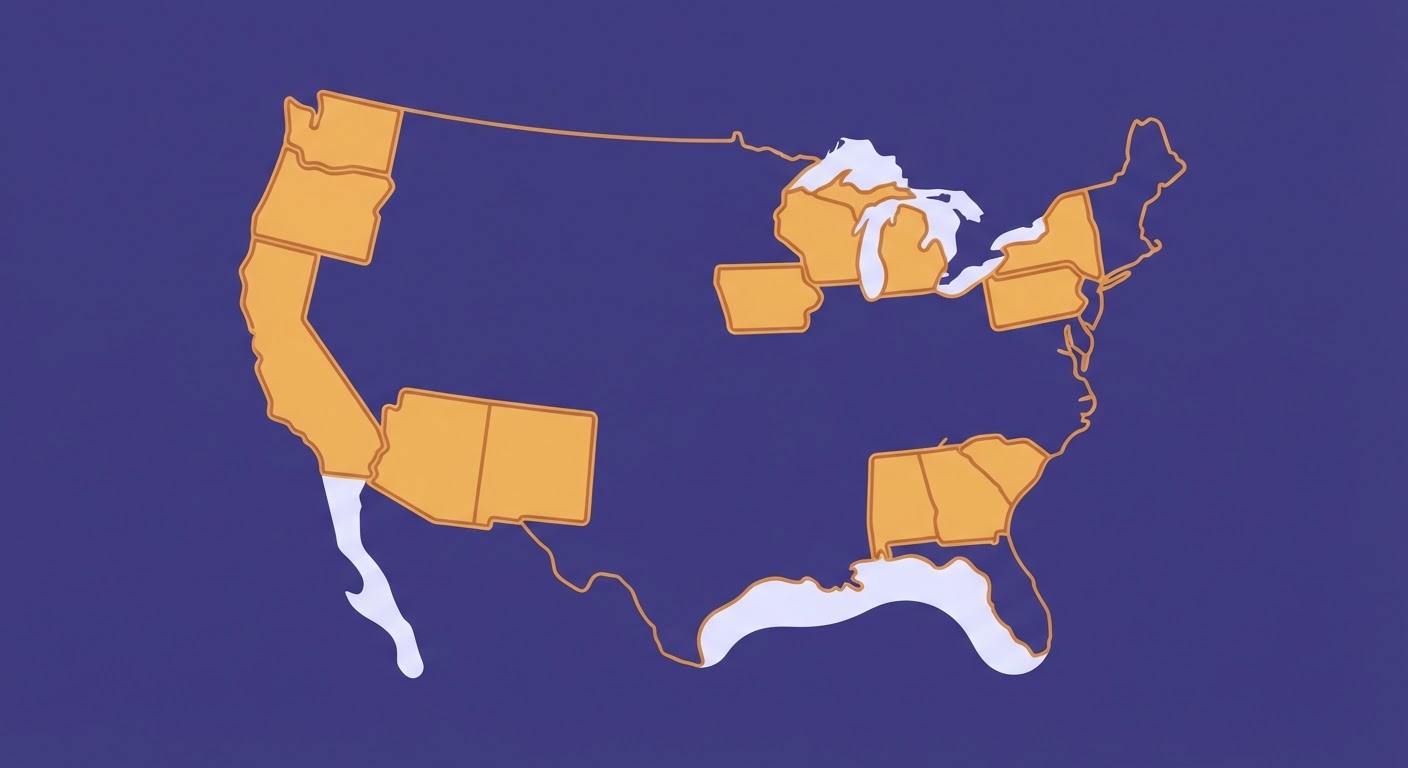
Divergence Across States
Because states retained discretion over how their TANF programs are administered – and some discretion over how Medicaid applications are processed for related populations – the degree of practical linkage varies widely today. Broadly, states fall into a few operational patterns, though the exact mechanics differ by state and can change during Medicaid or TANF policy updates:
- Fully separate processes. The household must file a distinct Medicaid application, often through a different portal or agency unit than the one handling TANF, even if both are administered by the same state department. Approval for one program has no automatic effect on the other beyond information-sharing.
- Shared application, separate determination. A single combined application form collects information for both programs, but eligibility for each is calculated independently using program-specific rules. This reduces paperwork duplication without restoring automatic enrollment.
- Streamlined or presumptive enrollment. Some states have built administrative shortcuts so that a confirmed TANF award triggers an expedited Medicaid eligibility check or a presumption of Medicaid eligibility pending verification, rather than a fully independent application process. This is the closest surviving analog to the old automatic model, though it is implemented through state administrative procedure rather than the older statutory guarantee.
No current federal rule requires the third pattern, and no state can legally reinstate the pre-reform automatic entitlement exactly as it existed before, because the statutory basis for it no longer exists. What remains are state-level administrative choices about how tightly the two intake processes are coupled.
What “Streamlined” Usually Means in Practice
Where states have built closer coupling between the two programs, it typically shows up in one or more of these ways rather than as a single unified guarantee:
- The same eligibility worker or unit handles both programs for a given household, reducing the chance of conflicting information requests.
- Income and household data verified for TANF is pulled directly into the Medicaid case file rather than being re-collected.
- A TANF approval generates an automatic Medicaid referral or a shortened Medicaid review rather than a full new application.
- Transitional Medicaid protections apply when a household loses TANF due to earnings increases, so coverage continues for a defined period even after cash assistance ends.
That last point – transitional coverage after TANF exit – is worth separating conceptually from automatic enrollment at intake. Many states that no longer offer anything resembling automatic Medicaid enrollment at the start of a TANF case still provide continued Medicaid coverage for a period after a family leaves TANF because of increased earnings. These are two different design questions: does starting TANF get you Medicaid without a separate application, and does losing TANF automatically end Medicaid. A state can answer these two questions differently.
How to Determine Which Model Applies in a Specific State
Because this is an area of active state administrative variation, and because state agencies periodically restructure their intake systems, the most reliable approach is to check current, state-specific sources rather than relying on general descriptions. A few practical ways to confirm the model in place:
- Look at the application itself. If the TANF application form or portal explicitly asks whether the applicant also wants to apply for Medicaid, or states that a Medicaid determination will be made as part of the same process, that is a strong signal of a shared or streamlined model.
- Check the state Medicaid agency’s eligibility pages. States that maintain a distinct application pathway for “family Medicaid” or “Medicaid for families with children” separate from TANF cash aid are typically operating a fully separate model, even if both are housed in the same department.
- Ask directly whether a separate Medicaid decision notice is issued. A household that receives one combined approval letter covering both programs is likely under a streamlined process; a household that receives two distinct notices, on different timelines, from what feel like different case numbers, is under separate determinations.
- Confirm transitional coverage rules independently. Even in states with separate intake processes, ask specifically about what happens to Medicaid when TANF ends due to earned income, since this is often governed by different rules than initial enrollment.
For caseworkers and financial coaches advising households with cases across multiple programs, the safest working assumption is that the two determinations are independent unless the state explicitly documents otherwise. Treating them as linked when they are not can lead to a false sense of security – a household may believe Medicaid is secure simply because TANF was approved, when in fact a separate Medicaid application was never completed or is pending additional verification.
Why This Distinction Matters for Households Juggling Both Programs
For a household managing TANF and Medicaid at the same time, the practical stakes of this variation show up at two points: intake and exit. At intake, a family assuming automatic coverage may go without submitting Medicaid paperwork, only to discover a gap in coverage weeks later. At exit – typically when earnings rise enough to end TANF eligibility – a family unaware of transitional Medicaid protections may assume coverage ends immediately, potentially missing enrollment steps needed to keep it going, or conversely delay reporting income changes out of fear of losing both benefits at once.
Because the rules governing both the intake linkage and the exit protections are set at the state level and subject to periodic administrative change, anyone advising on a live case should verify current procedure with the relevant state agency rather than relying on how the system worked in a prior year or in a different state.